All translations are issued as free pdf ebooks that can be read on screens and tablets as small as seven inches. Click on titles to be taken to the introduction and download page.
The Cloud Messenger is a masterpiece of Sanskrit literature, and was composed by the court poet Kalidasa some time before AD 634 in northern India. A Yaksha or nature deity begs a passing cloud to carry a message across the subcontinent to his grieving consort in the fabled city of Alaká.
The Gita Govinda is a cycle of Sanskrit songs, commentaries and invocations that depict Krishna's courtship of the cowherdess Radha. The text was added to temple inscriptions, set to music, choreographed for dance, and studied as a religious text. Countless poems, recitations, songs and dances point to its continuing popularity.
Phaedra is Racine's best known play , was performed in 1677, when Jean Racine had nine plays to his credit, but was poorly received, causing the writer to retire to marriage and a court position. With a character described as voluptuous, uneasy and jealous, Jean Racine was an ambitious courtier, an astute businessman, but also a childhood believer in the Jansenist doctrine.
Sextus Propertius was born around 50 BC, probably near Assisi in Umbria, and seems to have been dead by 2 BC. His family were well-to-do farmers who lost land after the Perusine War, but neither the confiscation of estates nor the early death of Propertius's father reduced its equestrian standing.
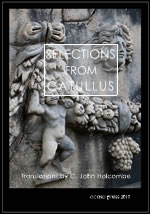
Catullus belonged to the 'neoteroi' or new Roman poets drawing inspiration and technique from Alexandrian Greek models. The 114 poems extant derive from a single manuscript, and are very mixed, ranging from the witty, brilliant and moving, to the indifferent and unnecessarily obscene.
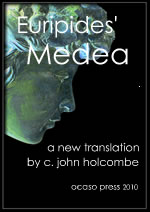
Medea, one of Euripides' masterpieces, was put on in 431 BC, together with his Philoctetes, Dictys and The Reapers, but won only third prize, losing out to work by Euphorion and Sophocles. The Medea legend was well known to Greek audiences. After the voyage of the Argonaughts, and the dangers which love-smitten princess helped him escape, Jason married Medea and brought her to Iolchus and then Corinth.
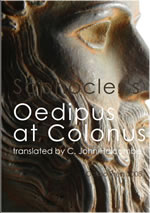
Oedipus at Colonus was the last play Sophocles wrote, and was not performed until BC 401, Oedipus at Colonus is in verse, in places of a very high order, with several of the choral pieces among the most famous of Greek poetry. I have tried in this translation to return attention to the verse, using rhyme to shape the formal nature of the text.
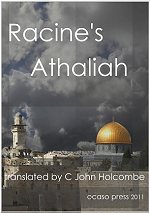
Athaliah was written for private performance at court, and has something of the gloom and piety that marked the later years of the Sun King's reign. It was staged in 1691 by the convent girls at St Cyr, and so belongs to the period between the Counter-Reformation and the grand operas of the following century.

Called by Dryden the best poem of Rome's best poet, the Georgics combines agricultural instruction, political reflection, country lore, mythology and allegory. Its appeal, at the time and ever since, has been its poetry, that unique fusion of beauty and expressiveness.
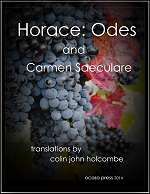
Other Roman poets, notably Plautus and Catullus, had imitated the Greek lyric verse forms, but no one before had used them so widely or successfully. Horace adapted the forms for the social life of Augustan Rome, treating everything with a wise and slightly self-deprecating modesty that Horace made his own.
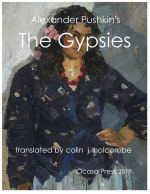
This 600-line poem is the last and most popular of Pushkin's southern cycle of romantic narrative poems. The translation faithfully reproduces Pushkin's rhyme schemes, and includes a facing Russian text.
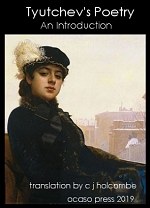
40 poems faithfully translated in their original rhyme schemes.
The free ebook contains formal and literal translations, the original
Russian text, detailed notes on Tyutchev's prosody, etc.
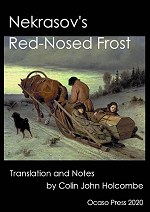
This edition of Red-Nosed Frost is the first full English translation since Julia Soskice's rendering of 1929. The free pdf ebook contains an Introduction, Biography, a literal version, full Russian prosody, notes and references.
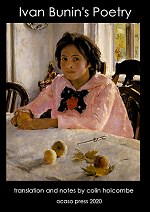
Ivan Bunin's poems are popular in Russia but much less known in the west. Yet Bunin won the Pushkin Prize for Poetry on three occasions, and was the first Russian to win the Nobel prize for Literature.
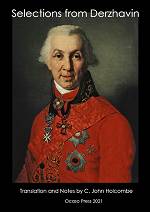
Translations in this ebook include the more important of Derzhavin's poems, namely On the Death of Prince Meshchersky (1779), Felitsa (1782), God (1785), the opening excerpt from the Waterfall (1794), written on the death of Prince Potemkin, and the Bullfinch (1800), which served as a short elegy on the death of his friend, Marshall Suvorov.
These translations of 100 Chinese poems in all genres over three millennia, have four aims. One is to create faithful renderings that stand on their own as acceptable poems. Two is to give some indication of the different Chinese poetry genres. Three is to convey the characters and personalities of the individual poets, and four is to provide the social background to Chinese poetry.
Russian verse translations: 131 poems from 41 leading poets, from Prokopovich to Mayakovsky. Faithful renderings that reproduce the features of Russian verse and yet still make acceptable poems in English. Published as two ebooks: translations themselves, and extensive notes on the original Russian and its interpretation.

The first of three volumes on a thousand years of French verse. Each of these celebrated poems is accompanied by a proper English translation, notes on the poets and literary features of the period, plus important references and resources.

The second of three volumes on a thousand years of French verse. Each of these celebrated poems is accompanied by a proper English translation, notes on the poets and literary features of the period, plus notable references and resources.
The third of three volumes on a thousand years of French verse. Each of these poems is accompanied by a proper English translation, notes on the poet and the poem concerned, plus notable references and resources.
With over thirty poems from nine languages, this free ebook is both an handy compilation of some of the world's most famous poetry, and an introduction to the translator's art. Most pieces are faithful renderings, reproducing the form, content and rhyme schemes of the original.
The extensive translations of individual Russian poems are now listed at the foot of the Reading Russian Verse page.
